
Epoxy vs Polyaspartic vs Polyurea for a Hayward Garage Floor
Epoxy Floors Grain Hayward compares epoxy, polyaspartic, polyurea and hybrid garage floor coatings for Hayward garages — how each handles sun, speed, odor and price, and where each one tends to fail — without arguing for any single product.
Bookings aren't open yet. Leave your name and number; your message is recorded, and you'll get one message when a local installer is available.
The floor as it starts
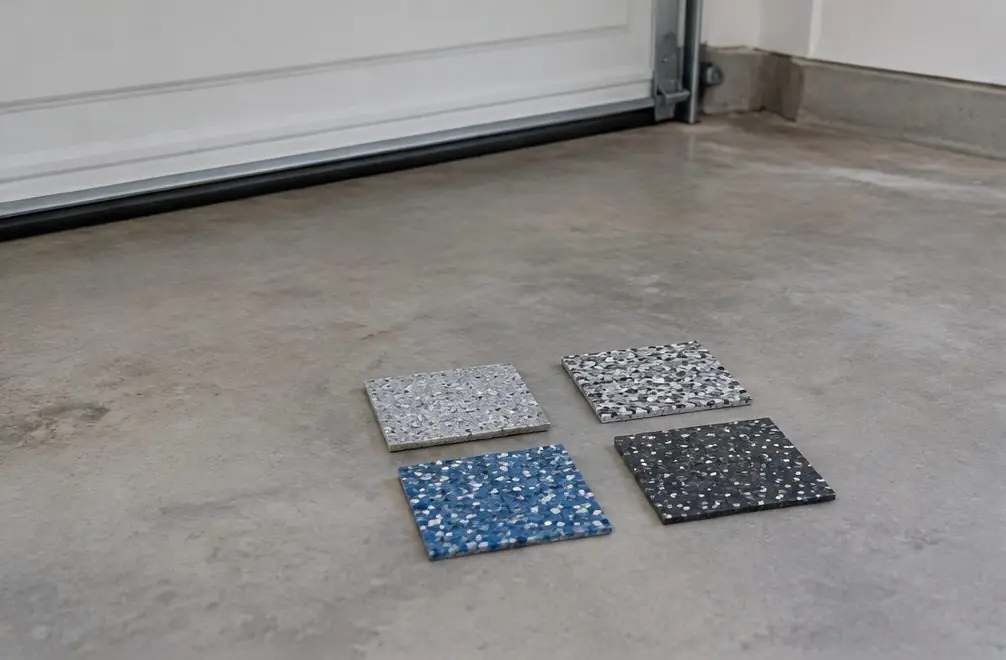 Illustration
The finished floor (illustration)
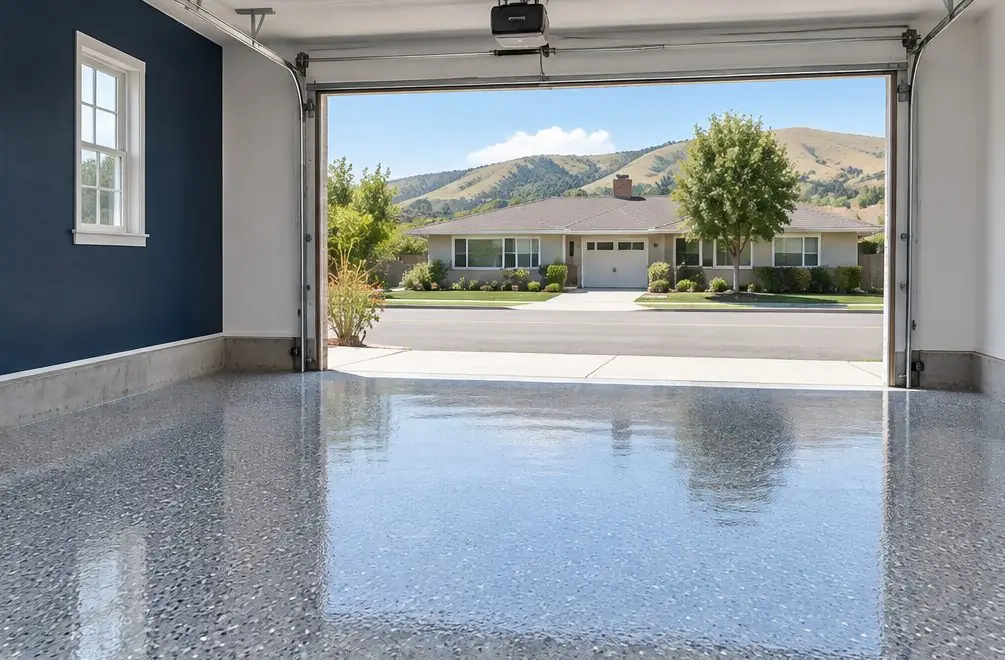 Illustration
Four names, two chemistries
Epoxy is a two-part resin that hardens by a slow chemical reaction. Polyurea and polyaspartic are close relatives: polyaspartic is a type of aliphatic polyurea with a slightly longer working time. A hybrid puts an epoxy base under a polyaspartic or polyurethane topcoat so each layer does what it does best.
The names sound like different families of product, and each seller tends to praise its own. A fair comparison looks at behavior on the floor, not at the label.
Epoxy and polyaspartic are not rivals so much as roles: a strong base coat and a quick, sun-stable top.
Side by side
| Question | Epoxy | Polyaspartic or polyurea | Hybrid |
|---|---|---|---|
| Sun at the open door | Can amber over time | Aliphatic types are generally more UV-stable | Topcoat carries the UV protection |
| Working time | Long, forgiving | Short, needs a practiced crew | Two stages |
| Time on site | Often several days before a car | Often one day, vehicles per the data sheet | A day or two |
| Odor while curing | Noticeable | Often stronger | Moderate |
| Typical Hayward price per sq ft | $5–$10 | $8–$13 | $7–$12 |
These are general ranges; the product data sheet decides for a specific job.
How each one fails
Epoxy fails most often by yellowing in sun and by losing its bond when the slab was not ground or was damp. Polyaspartic fails mostly by a rushed application: the short working time leaves little room to fix a missed spot, and a damp slab still pushes it off. Polyurea can be harder to bond if the primer is wrong. All three fail when the concrete underneath fails, which is why preparation is the first line on any estimate.
Which fits a Hayward garage
A covered garage with a lightly used floor suits epoxy with a polyurethane topcoat. A garage with its door facing open sky, or one that has to return to service fast, makes a case for polyaspartic. A hybrid is the compromise many installers use. Whichever is chosen, a cracked fault-zone slab is repaired first and a moisture test comes before anything is mixed.
Questions to ask whichever system is quoted
- What is the base coat and what is the topcoat, by type?
- How many coats and how thick, in mils?
- How was the slab prepared and was moisture tested?
- What does the written warranty cover, and what does it exclude?
- When can feet and when can vehicles return, according to the data sheet?
Where this leads
- Service page: Polyaspartic Garage Floor — A fast-curing polyaspartic or polyurea coating, installed in a day or two, with a clear view of what it does well and where epoxy still wins.
- Local page: Epoxy garage floor in Hayward Highland
- All services and typical prices: epoxy garage floor in Hayward
- More illustrated guides: Epoxy Floor Guides
Check availability and the price range for this setup
Bookings aren't open yet — a typical Hayward range in about 30 seconds.